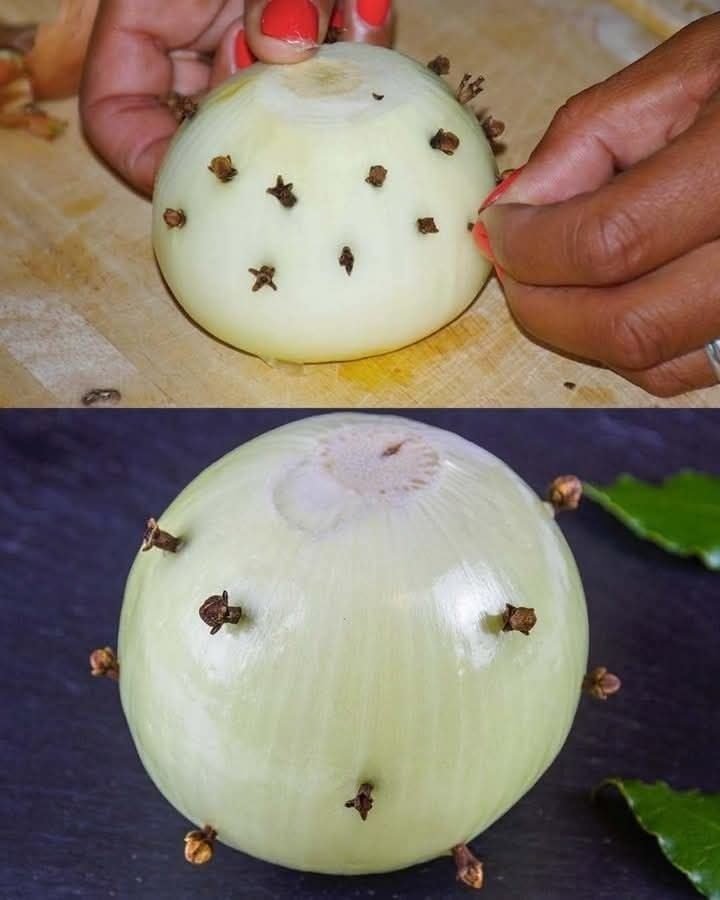
Add it to rice, lentils, or dried beans as they simmer. The subtle spice pairs especially well with earthy ingredients.
Why This Trick Is a Game-Changer
Enhances Flavor Naturally
The depth created by cloves reduces the need for excess salt or heavy seasoning. The dish tastes seasoned and complex without being salty.
Improves Balance
The mild sweetness of onion offsets the sharpness of cloves. Together they create a well-rounded base that enhances other ingredients.
Saves Fresh Herbs
When fresh herbs are out of season or unavailable, cloves provide a winter-friendly aromatic boost.
Aids Digestion
Cloves have long been valued for their antibacterial properties and digestive support. In rich, slow-cooked meals, they can help lighten the overall effect on the stomach.
Easy Removal
Unlike loose spices, the cloves remain secured in the onion, making cleanup simple.
Choosing the Right Ingredients
For best results:
Use whole cloves, not ground.
Choose a firm, fresh onion without soft spots.
Avoid overusing cloves; 5 to 6 is typically sufficient for a standard pot.
Simmer gently rather than boiling aggressively to preserve aroma.
If cooking a very large batch of soup or stock, you may increase to 8 cloves, but moderation is key.
Variations on the Tradition
Once you become comfortable with this method, you can experiment:
Add a bay leaf pinned to the onion with the cloves.
Combine with a bouquet garni for deeper herb complexity.
Lightly char the onion before adding cloves for a smoky dimension.
These small refinements allow you to tailor the flavor to your dish.
A Timeless Culinary Lesson
The clove-studded onion teaches an important principle: flavor does not always require complexity. Sometimes it is about restraint and patience.
My grandmother understood that cooking is often about layering subtle elements that work quietly in the background. No dramatic spice blends. No overpowering flavors. Just careful balance.
Once you try this method, you may find your soups richer, your sauces smoother, and your braises more fragrant. It is a small step with a surprisingly large impact.
The next time you begin a pot of soup or prepare a slow-cooked meal, press a few cloves into an onion and let it simmer gently. You may discover that this old-fashioned trick becomes a permanent part of your kitchen routine.