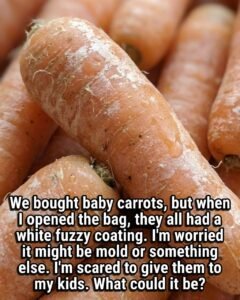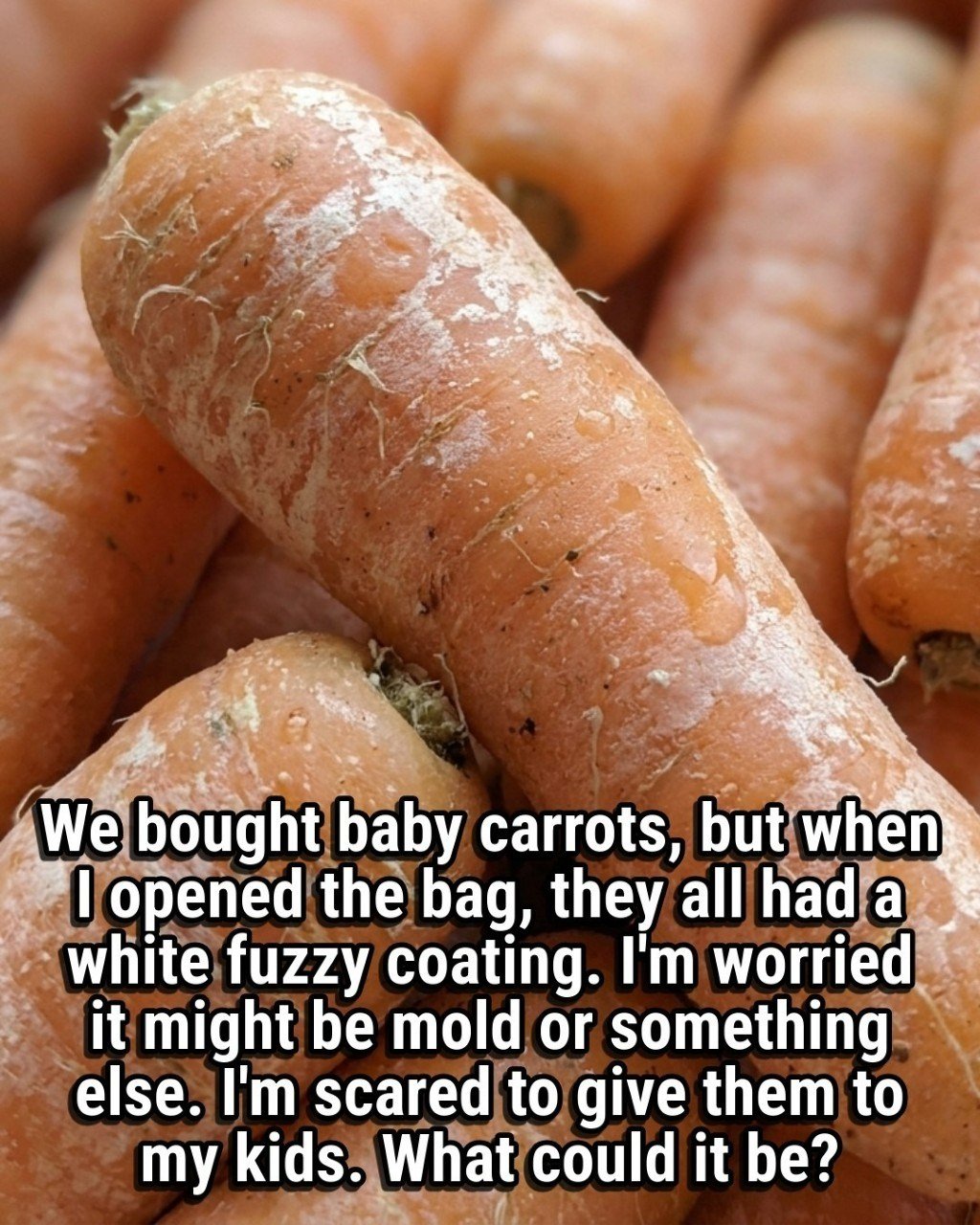
Let me give you a clear comparison.
Feature Carrot Blush (Safe) Mold (Unsafe)
Color White or pale gray Green, black, blue, dark gray
Texture Powdery, dry Fuzzy, slimy, or sticky
Smell No smell or normal carrot smell Musty, sour, or “off”
Can it be rinsed off? Yes, easily washes away No, may leave stains or residue
Does it spread? No, it’s on the surface only Yes, it spreads to other carrots
Is the carrot slimy? No Yes (often)
The bottom line: If the white coating rinses off easily and the carrot underneath is firm and bright orange, it’s carrot blush. Eat it.
If the coating is green, black, blue, or fuzzy, and the carrot feels slimy or smells bad—toss it.
How to Prevent Carrot Blush (Storage Tips)
Let me give you practical ways to keep your baby carrots fresher longer.
1. Keep Them Moist (But Not Wet)
Carrot blush is dehydration. The solution is to maintain moisture.
Store baby carrots in an airtight container (or keep the bag tightly sealed).
Add a damp paper towel to the container. The towel releases moisture, preventing the carrots from drying out.
Change the paper towel every few days to prevent mold.
2. Keep Them Cold
Carrots last longer in the refrigerator (32-40°F / 0-4°C). Don’t store them at room temperature.
3. Don’t Wash Until You’re Ready to Eat
Washing removes the protective moisture barrier. Wash baby carrots just before eating, not before storing.
4. Use Them Within 1-2 Weeks
Baby carrots are processed and peeled, so they don’t last as long as whole, unpeeled carrots. Plan to use them within 10-14 days.
5. Store Away from Ethylene-Producing Fruits
Fruits like apples, bananas, and pears release ethylene gas, which can cause vegetables to spoil faster. Keep carrots away from these fruits.
What About Full-Sized Carrots?
Full-sized, unpeeled carrots are less prone to white blush because they still have their protective skin. However, once you peel them, they will also develop white blush if stored exposed to air.
For full-sized carrots:
Store them in the refrigerator in a sealed bag or container.
Keep them unpeeled until ready to use.
If they do develop white blush after peeling, rinse them—they’re still fine.
When to Actually Toss Your Carrots (Red Flags)
Let me be clear about when carrots are truly spoiled.
Toss them if:
They are slimy or sticky to the touch.
They have a strong, unpleasant odor (sour, musty, or rotting).
They have visible mold (green, black, blue, or dark gray).
They are soft, mushy, or wrinkled (beyond just the surface).
They have dark spots or lesions.
Carrots that are still safe to eat:
White or pale gray coating (carrot blush)
Slightly bendy but not mushy
Small cracks or splits
Hairy roots (these are normal root hairs, not mold)
Frequently Asked Questions
Is carrot blush mold?
No. It’s dehydration. Mold is fuzzy, often colored, and smells musty. Carrot blush is white, powdery, and odorless.
Can I eat carrots with white blush without washing them?
Yes. The white coating is just dried carrot tissue. It’s harmless. But washing them will restore their bright orange color and crisp texture.
For Complete Cooking STEPS Please Head On Over To Next Page Or Open button (>) and don’t forget to SHARE with your Facebook friends