ADVERTISEMENT4
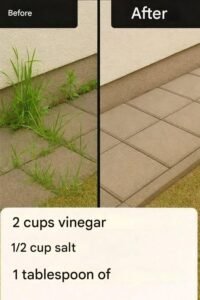
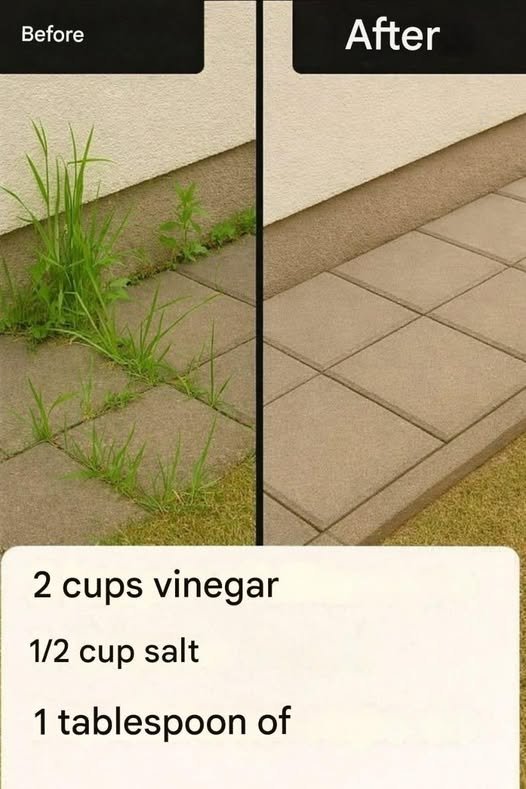
This recipe uses three simple items you likely already have. I’ve included why each one works and smart substitutions where possible.
The Core Formula
1 gallon white vinegar (5% acidity or higher): The acetic acid draws moisture out of plant tissues, causing them to dry out and die.
Why it works: Studies show vinegar with 20% acidity is most effective, but standard 5% household vinegar can work on young, annual weeds with repeated applications .
Substitute: Horticultural vinegar (20-30% acetic acid) is more potent but requires serious safety gear—gloves, goggles, long sleeves. Not recommended for casual use.
1 cup table salt (sodium chloride): Salt dehydrates plants and disrupts their ability to absorb water.
Use with caution: Salt persists in soil and can prevent any plant growth in treated areas. Best for cracks in driveways or patios where you don’t want anything to grow.
Substitute: For garden beds where you plan to replant, skip the salt and rely on vinegar + soap (see variations below).
1 tablespoon liquid dish soap: Helps the solution stick to waxy weed leaves instead of rolling off.
Tip: Use a basic, biodegradable soap without degreasers or added moisturizers.
Why it works: Studies show vinegar with 20% acidity is most effective, but standard 5% household vinegar can work on young, annual weeds with repeated applications .
Substitute: Horticultural vinegar (20-30% acetic acid) is more potent but requires serious safety gear—gloves, goggles, long sleeves. Not recommended for casual use.
1 cup table salt (sodium chloride): Salt dehydrates plants and disrupts their ability to absorb water.
Use with caution: Salt persists in soil and can prevent any plant growth in treated areas. Best for cracks in driveways or patios where you don’t want anything to grow.
Substitute: For garden beds where you plan to replant, skip the salt and rely on vinegar + soap (see variations below).
1 tablespoon liquid dish soap: Helps the solution stick to waxy weed leaves instead of rolling off.
Tip: Use a basic, biodegradable soap without degreasers or added moisturizers.
Optional Add-Ins for Specific Situations
Citrus essential oil (10-15 drops): Contains d-limonene, which can boost herbicidal activity and smells great.
Boiling water: For immediate scalding of weeds in pavement cracks (use alone or before applying the vinegar mix).
Boiling water: For immediate scalding of weeds in pavement cracks (use alone or before applying the vinegar mix).
Step-by-Step Instructions: Mix, Apply, and Maintain
1. Prep Your Space (Safety First!)
Put on gloves and eye protection, especially if you’re using stronger vinegar. Cover nearby desirable plants with cardboard or a tarp—this solution is non-selective and will harm any plant it touches.
Put on gloves and eye protection, especially if you’re using stronger vinegar. Cover nearby desirable plants with cardboard or a tarp—this solution is non-selective and will harm any plant it touches.
2. Mix the Solution
In a large bucket or sprayer, combine:
1 gallon white vinegar
1 cup table salt (skip if treating garden soil you plan to reuse)
1 tablespoon liquid dish soap
Stir gently to dissolve the salt without creating excessive suds. Pour into a pump sprayer for easy application.
Pro tip: Mix only what you’ll use that day. The solution can lose potency if stored long-term.
In a large bucket or sprayer, combine:
1 gallon white vinegar
1 cup table salt (skip if treating garden soil you plan to reuse)
1 tablespoon liquid dish soap
Stir gently to dissolve the salt without creating excessive suds. Pour into a pump sprayer for easy application.
Pro tip: Mix only what you’ll use that day. The solution can lose potency if stored long-term.
3. Apply on a Sunny, Dry Day
Timing matters! Apply the herbicide when:
 The sun is out (heat boosts effectiveness)
 There’s no wind (to avoid drift onto good plants)
 No rain is forecast for 24 hours (so it has time to work)
Spray directly onto weed leaves until lightly coated—no need to drench. Focus on young, actively growing weeds for best results.
Timing matters! Apply the herbicide when:
The sun is out (heat boosts effectiveness) There’s no wind (to avoid drift onto good plants) No rain is forecast for 24 hours (so it has time to work)Spray directly onto weed leaves until lightly coated—no need to drench. Focus on young, actively growing weeds for best results.
4. Wait and Watch
You should see wilting within 24-48 hours. Tough, perennial weeds (like dandelions or bindweed) may need a second application after they regrow.
You should see wilting within 24-48 hours. Tough, perennial weeds (like dandelions or bindweed) may need a second application after they regrow.
5. Reapply as Needed
Homemade herbicides work on contact but don’t create a long-term soil barrier. For persistent weeds, reapply every 1-2 weeks until the root system weakens.
Homemade herbicides work on contact but don’t create a long-term soil barrier. For persistent weeds, reapply every 1-2 weeks until the root system weakens.
Tips for Safe, Effective Use
 Target, don’t broadcast: This isn’t a “spray the whole yard” solution. Use a shield or cardboard to protect nearby plants while spraying.
Avoid soil saturation: Especially with salt in the mix, over-application can sterilize soil. Stick to cracks, crevices, and isolated weeds.
Test first: Try the solution on a small, inconspicuous weed to see how your specific plants respond before treating a large area.
Combine with manual removal: For best results, pull large weeds first, then spray the roots and any regrowth.
Store ingredients safely: Keep vinegar, salt, and soap out of reach of children and pets—even if they’re “kitchen safe.”
Target, don’t broadcast: This isn’t a “spray the whole yard” solution. Use a shield or cardboard to protect nearby plants while spraying. Avoid soil saturation: Especially with salt in the mix, over-application can sterilize soil. Stick to cracks, crevices, and isolated weeds. Test first: Try the solution on a small, inconspicuous weed to see how your specific plants respond before treating a large area. Combine with manual removal: For best results, pull large weeds first, then spray the roots and any regrowth. Store ingredients safely: Keep vinegar, salt, and soap out of reach of children and pets—even if they’re “kitchen safe.”Smart Variations for Different Scenarios
 Garden-Bed Friendly Version (no salt):
1 gallon vinegar + 1 tbsp soap only
Safer for soil health; may require more frequent reapplication
 Boiling Water Boost:
Pour boiling water directly on weeds in pavement cracks first, let dry, then apply vinegar mix for stubborn survivors
 Citrus-Enhanced Formula:
Add 10-15 drops orange or lemon essential oil to the base recipe for added potency and a fresh scent
Rain-Resistant Hack:
Add 1 tsp of vegetable oil to help the solution adhere better in humid conditions (use sparingly to avoid soil buildup)
Garden-Bed Friendly Version (no salt):1 gallon vinegar + 1 tbsp soap only
Safer for soil health; may require more frequent reapplication
Boiling Water Boost:Pour boiling water directly on weeds in pavement cracks first, let dry, then apply vinegar mix for stubborn survivors
Citrus-Enhanced Formula:Add 10-15 drops orange or lemon essential oil to the base recipe for added potency and a fresh scent
Rain-Resistant Hack:Add 1 tsp of vegetable oil to help the solution adhere better in humid conditions (use sparingly to avoid soil buildup)
Frequently Asked Questions
Will this kill my grass or flowers?
Yes—if it touches them. This is a non-selective herbicide. Always shield desirable plants and apply carefully.
How long does it take to work?
Most annual weeds show wilting within 1-2 days. Perennials may take multiple applications over several weeks.
Is this safe for pets and kids?
Once the spray has dried (usually within a few hours), the treated area is generally safe. However, keep pets and children away during application and until surfaces are dry.
Can I use this on my lawn?
Not recommended. Vinegar will kill grass on contact. This solution is best for hardscapes (patios, driveways) or spot-treating isolated weeds.
Why didn’t it work on my weeds?
Possible reasons: mature/perennial weeds, cloudy/rainy weather during application, or insufficient coverage. Try again on a sunny day, or combine with manual removal.
Will salt ruin my soil forever?
In small, targeted amounts, salt breaks down over time with rain and irrigation. But repeated heavy use can degrade soil structure. When in doubt, skip the salt for garden areas.
Will this kill my grass or flowers?
Yes—if it touches them. This is a non-selective herbicide. Always shield desirable plants and apply carefully.
How long does it take to work?
Most annual weeds show wilting within 1-2 days. Perennials may take multiple applications over several weeks.
Is this safe for pets and kids?
Once the spray has dried (usually within a few hours), the treated area is generally safe. However, keep pets and children away during application and until surfaces are dry.
Can I use this on my lawn?
Not recommended. Vinegar will kill grass on contact. This solution is best for hardscapes (patios, driveways) or spot-treating isolated weeds.
Why didn’t it work on my weeds?
Possible reasons: mature/perennial weeds, cloudy/rainy weather during application, or insufficient coverage. Try again on a sunny day, or combine with manual removal.
Will salt ruin my soil forever?
In small, targeted amounts, salt breaks down over time with rain and irrigation. But repeated heavy use can degrade soil structure. When in doubt, skip the salt for garden areas.
A Gentle Reminder: Work With Your Garden, Not Against It
Here’s the truth no one wants to admit: there’s no perfect, one-and-done weed solution—homemade or commercial. Weeds are nature’s way of covering bare soil, and sometimes the most eco-friendly approach is to prevent them in the first place: mulch garden beds, maintain healthy soil, and pull weeds when they’re small.
That said, when you do need a little help, this homemade herbicide offers a transparent, budget-friendly option for targeted use. It’s not about perfection—it’s about making informed, intentional choices for your space.
I’d love to hear how this works for you! Did you try the garden-bed version? Add citrus oil? Drop a comment below and share your experience. And if you know someone who’s wrestling with weeds (and wants to avoid harsh chemicals), pass this guide along. Here’s to growing a healthier, more conscious garden—one thoughtful step at a time.
Here’s the truth no one wants to admit: there’s no perfect, one-and-done weed solution—homemade or commercial. Weeds are nature’s way of covering bare soil, and sometimes the most eco-friendly approach is to prevent them in the first place: mulch garden beds, maintain healthy soil, and pull weeds when they’re small.
That said, when you do need a little help, this homemade herbicide offers a transparent, budget-friendly option for targeted use. It’s not about perfection—it’s about making informed, intentional choices for your space.
I’d love to hear how this works for you! Did you try the garden-bed version? Add citrus oil? Drop a comment below and share your experience. And if you know someone who’s wrestling with weeds (and wants to avoid harsh chemicals), pass this guide along. Here’s to growing a healthier, more conscious garden—one thoughtful step at a time.
ADVERTISEMENT5